
Leadership · 6 min read
Treating symptoms, missing the system: leadership in an age of complexity
Why today’s leaders must learn to think in systems, and why the most visible problem is rarely the real one.
By Padmini Kashyap, Founder, PROSCENT
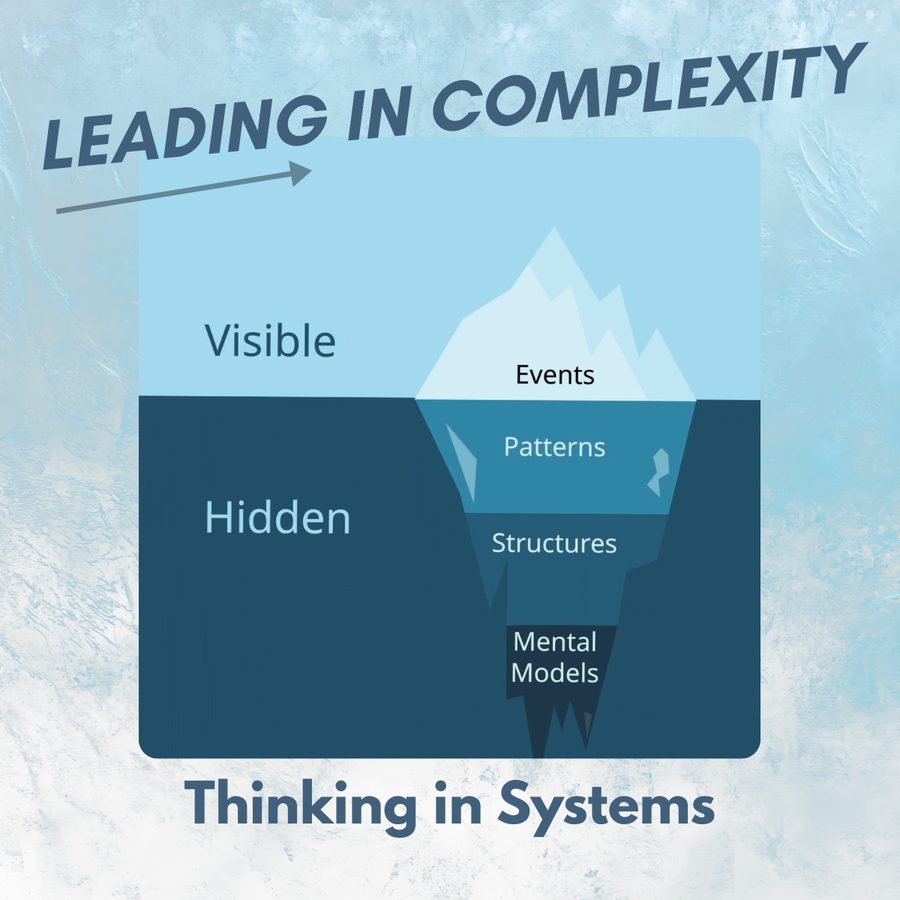
Rising attrition. Weakening collaboration. Teams that struggle with accountability. Most leaders have faced at least one of these, and most have reached for the usual fixes: a new policy, closer monitoring, a restructure. Yet the fixes rarely hold. The reason lies in how we have been taught to see leadership itself.
For many years, leadership was understood through a straightforward lens. Leaders were expected to analyse problems, make decisions quickly, and guide their organizations with clarity and authority. That model worked reasonably well when challenges were predictable and change moved at a slower pace.
Today, organizations operate in a very different landscape. Business environments are shaped by shifting markets, evolving technologies, diverse workforces and global interdependencies. Decisions made in one part of the organization often trigger consequences in another, sometimes immediately, sometimes over time. What appears to be a simple operational issue may actually be the outcome of multiple interconnected forces.
In such environments, traditional leadership approaches, focused primarily on solving visible problems, often fall short. The real challenge is no longer just about making better decisions. It is about understanding the system within which those decisions operate. And that requires leaders to develop a very different way of seeing their organizations.
When problems are not really problems
Many issues leaders confront today appear on the surface as operational problems. Attrition rises. Cross-functional collaboration weakens. Teams struggle with accountability.
The immediate response is often to intervene at the level where the issue becomes visible, through new policies, stricter monitoring or structural changes. Yet these responses frequently produce only temporary relief.
This is because the visible problem is often only the outcome of deeper patterns within the organization: patterns shaped by incentives, communication structures, cultural assumptions and leadership behaviours. Without understanding these underlying dynamics, leaders end up treating symptoms rather than the system itself.
Seeing the organization as a living system
Organizations today behave less like machines and more like living systems. Actions generate feedback. Relationships influence outcomes. Behaviours reinforce other behaviours. A leader’s decision therefore rarely operates in isolation. For example:
- A push for aggressive performance targets may unintentionally weaken collaboration.
- Increased oversight intended to improve accountability may reduce ownership.
- Rapid decision-making at the top may discourage initiative across teams.
None of these outcomes are deliberate. They simply emerge from how the system responds to leadership actions. Effective leadership in complexity requires learning to see these connections.
From command to collective learning
In complex environments, the role of leadership begins to shift. Instead of being the sole source of direction, leaders increasingly become architects of environments where learning can occur across the organization.
This means encouraging dialogue rather than only issuing directives. It means creating space for teams to surface assumptions, challenge thinking and reflect on outcomes. And perhaps most importantly, it means recognizing that no single leader can fully understand the entire system alone.
Insight often emerges when multiple perspectives interact.
The discipline of reflective leadership
One of the most powerful leadership capabilities in complex systems is the ability to question one’s own assumptions. Every leader carries a set of internal beliefs about how organizations work:
- What motivates people
- How decisions should be made
- What constitutes performance
- What leadership should look like
These beliefs silently shape decisions. Yet in complex systems, assumptions that once worked can quietly become constraints. Reflective leadership requires the willingness to pause and ask: What assumptions might be shaping this situation? What patterns might we be overlooking?
Often, the most significant shifts in organizations begin not with structural change, but with leaders changing how they see the system itself.
Leadership as system stewardship
Leadership in complexity is therefore less about control and more about stewardship of the organizational system. Leaders influence the quality of conversations. They shape how teams interpret challenges. They determine whether learning is encouraged or avoided.
Their role is not simply to solve problems, but to create conditions where the organization becomes capable of solving problems together. This shift may appear subtle, yet it represents a profound evolution in leadership.
In the age of complexity, the strongest organizations are not those led by the most decisive individuals. They are those where collective intelligence is allowed to emerge and evolve.
A different kind of leadership strength
Leadership strength today is not measured only by confidence or decisiveness. It is measured by the capacity to:
- See connections rather than isolated events
- Encourage inquiry rather than immediate conclusions
- Cultivate learning across the organization
In complex systems, resilience and innovation rarely come from individual brilliance. They emerge from systems where people are able to think, learn and adapt together. And the leaders who recognize this shift are the ones who will shape the organizations of the future.
Continue the conversation
Did this resonate with you? Share your thoughts on LinkedIn, or talk to us about bringing this thinking into your organization.